
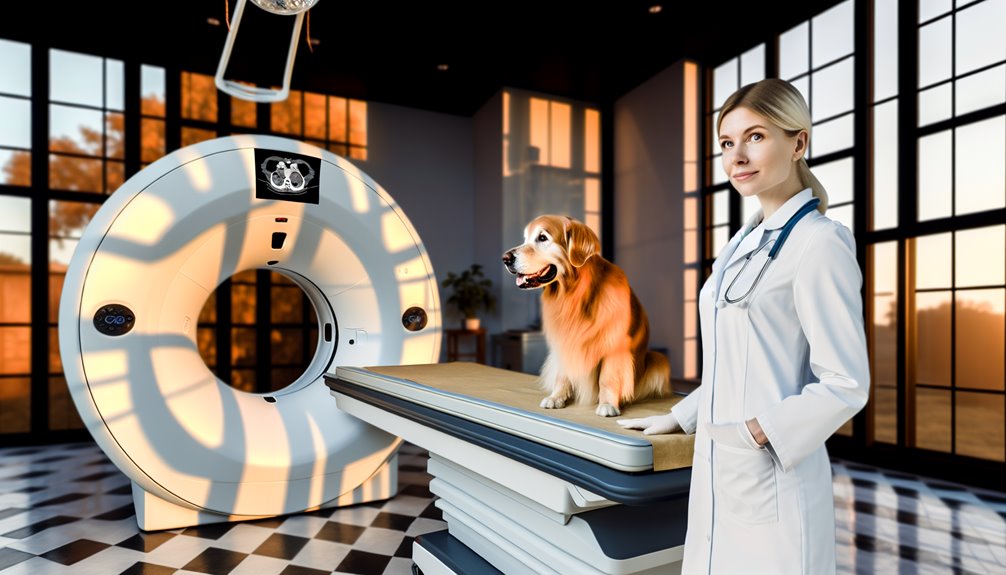
Benefits of 3D CT Imaging for Pets: Perkins Road Vet’s VetCAT Advantage
Perkins Road Vet’s VetCAT offers a transformative approach to pet care through the integration of 3D CT imaging technology. This innovation enhances diagnostic accuracy and allows for detailed visualization of a pet’s internal structures. High-resolution images facilitate precise treatment planning and often eliminate the need for invasive procedures. As pets experience increased comfort and safety, owners are provided with peace of mind. What implications does this have for future veterinary practices?
Key Takeaways
- 3D CT imaging offers enhanced diagnostic accuracy, identifying conditions often missed by traditional methods.
- Detailed visualization of anatomy improves the detection of subtle lesions, fractures, and tumors.
- Non-invasive imaging reduces the need for exploratory surgeries, minimizing risk and discomfort for pets.
- High-resolution imaging supports better treatment planning, optimizing surgical and therapeutic interventions.
- Shorter, comfort-focused procedures reduce pet anxiety, enhancing the overall veterinary experience.
Enhanced Diagnostic Accuracy
Leveraging advanced technology, 3D CT imaging significantly enhances diagnostic accuracy in veterinary medicine by providing detailed, cross-sectional images of pets’ internal structures. This cutting-edge tool allows veterinarians to identify and evaluate conditions that might be missed with traditional imaging techniques. By capturing comprehensive views of bones, tissues, and organs, 3D CT aids in pinpointing abnormalities with precision, thus facilitating early intervention and tailored treatment plans. The incorporation of this technology in veterinary practice fosters a community of informed pet owners who feel more confident in the care provided to their beloved animals. As the demand for superior diagnostic methods grows, 3D CT imaging stands out as a pivotal advancement, ensuring pets receive the highest standard of medical attention.
Detailed Visualization of Pet Anatomy
3D CT imaging provides an unparalleled view of pet anatomy, offering an enhanced diagnostic accuracy that is critical for effective veterinary care. This advanced imaging technique allows veterinarians to obtain comprehensive internal insights, facilitating the identification of complex conditions that might be missed with traditional imaging methods. By rendering detailed cross-sectional images, 3D CT scans empower veterinarians to make informed decisions, ultimately improving treatment outcomes for pets.
Enhanced Diagnostic Accuracy
The advent of advanced imaging technologies has revolutionized veterinary diagnostics, with 3D CT imaging at the forefront, offering unparalleled enhanced diagnostic accuracy through detailed visualization of pet anatomy. This technology allows veterinarians to obtain high-resolution images that reveal intricate anatomical structures, enhancing their ability to identify abnormalities with precision. By providing a 360-degree view of the pet’s internal systems, 3D CT scans facilitate the detection of subtle lesions, fractures, and tumors that might be missed by traditional imaging methods. This capability significantly improves diagnostic outcomes and informs effective treatment plans. As a result, pet owners can feel assured in the thoroughness of their pet’s health assessments, fostering a sense of community and trust in modern veterinary care.
Comprehensive Internal Insights
In the realm of veterinary medicine, comprehensive internal insights are crucial for accurate diagnosis and treatment planning. The advent of 3D CT imaging, exemplified by Perkins Road Vet’s VetCAT, offers an unprecedented view into pet anatomy, revealing intricate details often hidden in traditional imaging. This advanced technology allows veterinarians to visualize bone structures, soft tissues, and vascular systems with remarkable clarity. By providing a 360-degree perspective, VetCAT facilitates the detection of anomalies such as tumors, fractures, and organ irregularities, enhancing diagnostic precision. The detailed visualization aids in formulating targeted treatment plans, ultimately improving patient outcomes. Consequently, pet owners and veterinary professionals alike gain confidence in the care provided, fostering a sense of community and trust within the veterinary practice.
Improved Treatment Planning
Through the integration of advanced imaging technologies, veterinary medicine has significantly enhanced its approach to treatment planning. 3D CT imaging offers a detailed, multi-dimensional view of a pet’s anatomy, enabling veterinarians to develop more precise and tailored treatment strategies. This technology allows for the identification of complex conditions and subtle anatomical variations that may not be discernible through traditional imaging. Detailed cross-sectional images facilitate comprehensive analysis, supporting veterinarians in predicting potential complications and optimizing surgical or therapeutic interventions. Consequently, pet owners can feel confident that their furry companions are receiving care that is both accurate and personalized. By fostering a deeper understanding of each pet’s unique physiology, 3D CT imaging strengthens the vet-client relationship, ensuring pets receive the best possible care.
Reduced Need for Invasive Procedures
3D CT imaging significantly reduces the need for invasive procedures by providing detailed anatomical insights that enhance diagnostic accuracy. This advanced imaging technique allows veterinarians to pinpoint conditions with precision, often eliminating the necessity for exploratory surgeries that can be stressful and risky for pets. As a result, the reliance on surgical interventions is minimized, ensuring a less invasive approach to pet healthcare.
Minimizing Surgical Interventions
While technological advancements continue to revolutionize veterinary medicine, 3D CT imaging has significantly contributed to minimizing surgical interventions for pets. By providing detailed cross-sectional images, this technology enables veterinarians to assess internal structures without invasive procedures. Consequently, conditions that once necessitated exploratory surgery can now be diagnosed through non-invasive means, reducing the risk and discomfort associated with traditional surgical methods. This approach not only enhances animal welfare but also fosters a sense of trust and reassurance among pet owners, who are integral to the veterinary care community. Furthermore, the precision of 3D CT imaging facilitates targeted treatment plans, enabling veterinarians to address specific issues effectively. This method ensures a streamlined care process, aligning with the collective goal of optimizing pet health outcomes.
Enhanced Diagnostic Accuracy
The advent of advanced imaging technologies has propelled veterinary diagnostics into a new era, with 3D CT imaging at the forefront. This innovation markedly enhances diagnostic accuracy, minimizing the necessity for invasive procedures. By providing detailed cross-sectional images, it allows for the precise evaluation of complex conditions, ensuring pets receive the most accurate diagnosis possible. This approach not only fosters a deeper understanding of a pet’s health but also strengthens the human-pet bond through improved care.
- Peace of mind for pet owners: Trusting that their furry companions are receiving the best possible care.
- Reduced stress for pets: Less need for stressful and painful diagnostic procedures.
- Community connection: Knowing fellow pet owners are also benefiting, creating a sense of shared relief and progress.
Faster Diagnosis and Recovery
Given the technological advancements in veterinary medicine, 3D CT imaging has emerged as a pivotal tool for achieving faster diagnosis and recovery in pets. This technology allows veterinarians to obtain high-resolution, cross-sectional images of a pet’s body, enabling the identification of abnormalities that might be missed in traditional radiographs. The VetCAT system at Perkins Road Vet provides immediate results, reducing the waiting time for critical diagnostic information. This rapid turnaround facilitates timely medical interventions, which is crucial for conditions requiring urgent care. Furthermore, early and accurate detection of ailments allows for more precise treatment plans, minimizing the progression of diseases. As a result, pets experience shorter recovery periods, enhancing their overall quality of life and fostering a sense of reassurance for pet owners.
Increased Comfort and Safety for Pets
3D CT imaging significantly enhances the comfort and safety of pets during the diagnostic process. This advanced technology reduces the need for invasive procedures, thereby minimizing stress and discomfort for the animals. By providing detailed, high-resolution images, it allows for accurate diagnoses without prolonged examination times, ensuring pets spend less time in clinical settings. The precision of 3D CT imaging also mitigates risks associated with misdiagnosis or delayed treatment.
- Reduced anxiety: Pets experience less stress due to shorter, non-invasive procedures.
- Enhanced accuracy: Detailed imagery leads to precise diagnoses, fostering trust in pet care.
- Improved outcomes: Early detection of conditions translates into better health prospects for beloved pets.
In this way, 3D CT imaging fosters an environment of safety and compassion.
Frequently Asked Questions
How Does 3D CT Imaging Technology Work?
3D CT imaging technology operates by rotating an X-ray source around the patient to capture multiple images, which are then reconstructed into a detailed three-dimensional model, allowing for enhanced diagnostic precision and comprehensive visualization of anatomical structures.
Is 3D CT Imaging Available for All Types of Pets?
3D CT imaging is increasingly accessible for various pet types, though availability can vary by clinic. It’s predominantly used for cats and dogs, with expanding capabilities for exotic and small animals, enhancing diagnosis and treatment precision.
What Is the Cost of a 3D CT Scan for Pets?
The cost of a 3D CT scan for pets varies widely, generally ranging from $500 to $1,500. Factors influencing this include the facility, location, and specific veterinary requirements. Pet owners should consult their veterinarian for precise estimates.
Are There Any Side Effects of 3D CT Imaging for Pets?
3D CT imaging for pets generally has minimal side effects. However, potential risks include mild sedation reactions and rare radiation exposure concerns. Veterinarians ensure the procedure’s safety, fostering trust and reassurance among pet owners seeking advanced diagnostic solutions.
How Long Does a Typical 3D CT Imaging Session Take?
A typical 3D CT imaging session for pets generally takes between 10 to 30 minutes, varying by the complexity of the examination. This efficient process allows for rapid diagnosis, fostering a sense of community among conscientious pet owners.
Conclusion
In conclusion, the integration of 3D CT imaging at Perkins Road Vet’s VetCAT significantly elevates veterinary care by providing unparalleled diagnostic accuracy and detailed visualization of pet anatomy. This technology enhances treatment planning and reduces the need for invasive procedures, leading to faster diagnoses and recovery times. Moreover, the focus on pet comfort and safety ensures a less stressful experience, fostering trust between pet owners and veterinarians. Overall, VetCAT represents a transformative advancement in veterinary diagnostics and care.


